You Can't Stream on a Network That Can't Load Twitter: The Honest Truth About MTN One TV

The Audacity, And Why It's Actually Interesting
Let's give MTN its flowers first, because they deserve at least that much before we start asking the hard questions. MTN Group has officially launched MTN One TV, a pan-African streaming platform that promises to offer free ad-supported viewing, subscription tiers, pay-per-view options, and live TV channels, all under one roof, across 16 African markets, powered by the same telecom infrastructure that 307 million subscribers already use every single day. On paper, this is a genuinely smart play. They are not trying to be Netflix. They are not trying to be Showmax. They are trying to be something that no one has fully cracked in Africa yet: a streaming platform that works with the continent's realities rather than against them. The platform, built in partnership with UK video software company Synamedia following a deal announced in April 2025, allows users to pay via airtime, mobile money, and direct mobile billing, which means that for the first time, a streaming service is treating the credit-card gap in Africa as a feature to work around rather than an audience to ignore. That is not nothing. In fact, for a continent where the majority of people have never owned a credit card but almost everyone has an MTN SIM, that payment infrastructure is arguably the most important thing about MTN One TV. It is also worth noting the context in which this launch is happening. Showmax, MultiChoice's streaming arm, shut down entirely in April 2026 after Canal+ completed its takeover of MultiChoice in July 2025 and restructured the content business. Netflix remains prohibitively expensive for the average Nigerian or Ghanaian household. The gap in the mid-market streaming space is real and it is wide open. MTN is not wrong to want to fill it. The question, the only question that matters, is whether they can actually pull it off. Because this is not MTN's first attempt. And that is where the story gets complicated.
They've Been Here Before, And It Didn't End Well
Here is a fact that the press releases will not lead with: MTN One TV is not MTN's first streaming venture. Not even their second. In 2014, MTN launched Frontrow, a streaming platform, in South Africa. By 2016, it had been rebranded as VU. By 2017, it had been quietly discontinued, unable to compete with Netflix, which had launched in South Africa in January 2016, or with Showmax, which MultiChoice had built specifically to understand local audiences. MTN's first streaming venture lasted about as long as a Nigerian data bundle. And here is the uncomfortable truth about why it failed: not because the idea was wrong, but because MTN approached streaming the way telecom companies almost always approach streaming, as a distribution problem rather than a content problem. They built a pipe and assumed people would flow through it. They did not ask what people actually wanted to watch, or why they would choose VU over Netflix, or what local story would make a subscriber feel seen in a way that no foreign platform could replicate. They solved for infrastructure and forgot about soul. MTN is not alone in this failure. The global graveyard of telecom-owned streaming platforms is enormous and humbling. Verizon, one of America's largest telecoms, launched Go90 in 2015, a mobile-first streaming service targeted at millennials, backed by hundreds of millions of dollars in content investment. By July 2018, it was dead. The platform never solved a real audience need. Users didn't know what Go90 was for, and Verizon never had the content culture to tell them. AT&T bought DirecTV and then Warner Media, building what should have been an unstoppable content-and-distribution empire. The result was HBO Max, which eventually became Max, but only after years of dysfunction, content deletion, and executive chaos that showed exactly how difficult it is to run a content company from inside a telecom culture. T-Mobile launched TVision in 2020, a live TV streaming service, and killed it less than a year later, redirecting subscribers to YouTube TV instead. The lesson from every one of these failures is the same: having the pipes does not mean you know how to fill them. Telecom companies are extraordinarily good at infrastructure, billing, and logistics. They are, historically, quite bad at understanding what makes people emotionally invest in a piece of content. That is a completely different skill. MTN's question is whether, this time, with a cleaner product strategy and a more desperate African market, they have finally learned the lesson.
The Nigerian Reality Check: You Can't Stream on a Network That's On Fire
Now let's bring this home. Because for all the international context and elegant product strategy, MTN One TV will live or die, first and most crucially, in Nigeria. And Nigeria is where the conversation gets very, very honest. MTN Nigeria currently serves over 85 million subscribers. It invested a staggering N900 billion in network expansion in 2025 and has announced plans to spend a further N1 trillion in 2026. Those are massive numbers. They are also, for a significant portion of those subscribers, invisible in daily experience. Nigerian social media, particularly Twitter and TikTok, is a near-constant stream of complaints about MTN's network quality: calls dropping mid-conversation, data disappearing faster than it should, buffering that turns a two-minute YouTube video into a ten-minute exercise in patience. The situation became so heated that in June 2026, MTN held a public stakeholder forum literally called "Data on Trial," where CEO Karl Toriola acknowledged consumer frustrations while explaining that no network can guarantee 100% service quality in Nigeria's operating environment. He cited vandalism, infrastructure challenges, and user behaviour as contributing factors. He also made headlines by stating, without apparent irony, that truly unlimited mobile data does not exist anywhere in the world, a comment that went viral precisely because it landed at the same moment MTN was announcing a new streaming platform. Think about that for a second. MTN's CEO is, in the same week, telling Nigerians that unlimited data is a myth and that his company just launched a streaming service. The cognitive dissonance alone should give the product team pause. Because streaming, by its very nature, is one of the most data-intensive activities a smartphone can perform. A single hour of HD video streaming consumes between 1.5GB and 3GB of data. And since the Nigerian Communications Commission approved a 50 percent telecom tariff hike in January 2025, the first major adjustment since 2013, MTN's data has become meaningfully more expensive. The cheapest monthly plan now starts at N1,500 for 2GB. A 10GB plan costs N4,500. For a platform built around the promise of accessible entertainment, the maths is not “mathing”. How do you sell a streaming service to a population that is already rationing data, on a network that the operator himself admits cannot be guaranteed? The answer MTN seems to be betting on is zero-rating, the practice of making MTN One TV content not count against a subscriber's data bundle. That would be the single most powerful move they could make in Nigeria. Without it, MTN One TV risks being a premium product sitting on an infrastructure that cannot reliably deliver it.
The Advantages Are Real, But So Are the Landmines
To be balanced about this, because this is not just an obituary, it is an honest assessment, MTN One TV has genuine structural advantages that no competitor can easily replicate. The 307 million subscriber base is not a marketing number. It is the largest captive potential audience that any African streaming platform has ever had access to at launch. No Netflix, no Showmax, no local platform launched in Africa with anything close to that distribution reach. MTN also controls the payment layer. The ability to charge content to airtime means that a market vendor in Ibadan who has never visited a bank branch can subscribe to MTN One TV the same way they buy data, by dialling a code. That is a profound democratisation of access if it is executed properly. And the timing, as noted, is genuinely favourable. With Showmax gone and Netflix still priced out of reach for the majority of African households, there is a content vacuum in the mid-market. MTN is not wrong to move into it. But here are the landmines. First, content. A streaming platform is, at its core, a content business. And content is not infrastructure. Content requires relationships with filmmakers, writers, and distributors. It requires original programming investment. It requires curation taste. Does MTN have any of that? Their announcement talks about "local and international content" and "partnerships with African creators and broadcasters", language that is vague in exactly the way that suggests the content strategy is still being assembled. Compare this to how Netflix entered Nigeria: with a $15 million acquisition of Lionheart and a slate of Nollywood commissions that showed the industry they were serious. MTN One TV has not, as yet, announced any comparable content investment. Second, the question of MTN SIM dependency. While it has not been officially confirmed, the platform's deepest functionality, airtime billing, mobile money payments, zero-rating, and seamless integration, will almost certainly work best, or possibly only, for MTN subscribers. That is potentially a significant access barrier in markets like Nigeria where Airtel, Glo, and 9Mobile users together represent hundreds of millions of people. And third: the user experience problem. The bar for streaming UX has been set by Netflix and YouTube. If MTN One TV buffers on its own network, or has a clunky interface, or makes content discovery difficult, no subscriber loyalty will protect it. Nigerians are not patient with bad technology. They will simply go back to downloading via Telegram, which should not be encouraged at all.
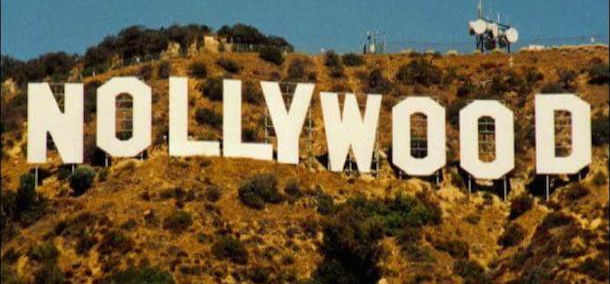
What This Means for Nollywood, The Question Nobody Is Asking Loudly Enough
This is where the conversation gets personal. Because underneath all the telecom strategy and infrastructure investment is a question that the Nigerian film industry should be shouting from every rooftop: will MTN pay Nollywood properly? The relationship between streaming platforms and the creative industries that feed them is, globally, the central tension of the content economy. Netflix pays for content. It pays acquisition fees, licensing deals, and commissions. It paid EbonyLife hundreds of millions of naira for shows like Castle & Castle and Blood Sisters. It pays directors and showrunners fees that have materially changed what it means to make a Nigerian film or television series. Showmax, at its best, did something similar. These investments created a new market rate for Nigerian content that pulled writers, directors, and producers toward higher production standards. Can MTN One TV do the same? The honest answer is: only if they commit to it financially, and there is no evidence yet that they have. If MTN One TV is primarily an aggregator, pulling existing Nollywood content onto its platform at minimal licensing cost and calling it "local content strategy", then it will not move the needle for Nigerian filmmakers in any meaningful way. It would be, in effect, a library service with a telecom logo. But if MTN is willing to function as a commissioning broadcaster, putting original production money into Nigerian stories, creating Nollywood originals, giving filmmakers the kind of budgets that allow them to compete with international production standards, then MTN One TV could be transformative. The blueprint already exists. Look at what Canal+ has done with African cinema through its co-production arm. Look at what MUBI has done by acquiring and distributing films like My Father's Shadow to global audiences. Look at what a well-resourced streaming deal can mean for a Nigerian director's career. The creative economy is not a passive beneficiary of streaming platforms. It is the reason people subscribe. If MTN One TV fails to invest seriously in original African content, the kind of content that cannot be found anywhere else, it will become a commodity platform in a commoditised market. And commodity platforms do not survive. Content is not the supporting act. Content is the whole show.
The Verdict: A Bold Bet on a Broken Foundation, With One Path to Survival
Here is the honest verdict on MTN One TV, written not with hostility but with the kind of clarity that the industry deserves. The idea is sound. The timing is as good as it has ever been. The distribution infrastructure is unparalleled on the continent. The payment innovation is genuinely important. And the competitive vacuum left by Showmax is real and waiting to be filled. But the foundation has cracks, and they are serious. MTN is asking Nigerians, and 16 markets of African subscribers, to trust it with their entertainment hours on a network that the company itself cannot guarantee. It is launching a data-intensive service in an era when its own data pricing has attracted national protests and a public forum called "Data on Trial." It is entering a content business without a publicly articulated content investment strategy. And it is doing all of this carrying the ghost of Frontrow/VU, a streaming venture that failed for many of the same structural reasons. History, in the telecom-streaming space, is not encouraging. Verizon's Go90 lasted three years and cost hundreds of millions. T-Mobile's TVision lasted less than a year. AT&T's streaming ambitions required a full corporate restructuring to salvage. Every one of these companies was bigger, richer, and more experienced in the content business than MTN. The pattern is clear: telecoms make poor streamers because they are trained to think about capacity, not desire. The one path to survival, and it is a real path, not a theoretical one, is for MTN to resist the temptation to be everything and instead do one thing better than anyone else on the continent: serve the African viewer who has been priced out, locked out, or simply forgotten by every other platform. Give them zero-rated access. Give them Yoruba films, Hausa series, Igbo comedies, Ghanaian drama, Congolese music documentaries. Commission originals. Pay Nollywood properly. Build the platform that feels like it was made by someone who actually watches African TV. Because if MTN One TV becomes the platform where African stories live, not as an afterthought but as the entire point, then no amount of Netflix money or Canal+ infrastructure can compete with that. The subscribers are already there. The hunger for local content has never been greater. The infrastructure, imperfect as it is, exists. What MTN needs now is not a better app. It is a better answer to the question every African viewer is quietly asking: is this one for us?
"MTN is asking Nigerians to trust it with their entertainment hours on a network that the company itself cannot guarantee. It is launching a data-intensive service in an era when its own data pricing has attracted national protests and a public forum called 'Data on Trial.' Content is not the supporting act. Content is the whole show. And MTN has not told us what it plans to put on stage."


Comments