What Institution Needs To Be In Place For Filmmakers To Earn Royalties

Royalties Are Not Luck, They Are Designed Systems
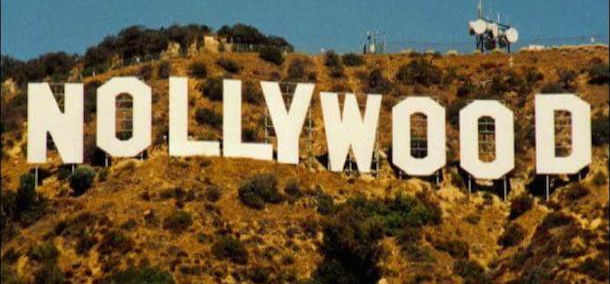
One of the biggest misconceptions in Nollywood is that royalties are some kind of bonus, a lucky outcome when a film performs well. That idea is fundamentally flawed. In structured industries, royalties (or residuals) are not rewards, they are pre-designed financial outcomes built into contracts, enforced by institutions, and backed by law. In Hollywood, for instance, a film doesn’t just “make money once.” Every time it is broadcast, licensed, streamed, or resold, a chain reaction of payments is triggered for actors, writers, and sometimes even crew. That is not generosity, it is architecture.
Now place that beside Nollywood, where films can move from cinema to streaming platforms, then end up on TV or YouTube, and the original creators may never see another kobo after the first payment. Same content lifecycle, completely different financial outcome. The difference is not success or scale, it is system design. Nollywood doesn’t lack royalties because its films don’t travel, it lacks royalties because there is no structured mechanism to make that travel profitable for everyone involved. Until royalties are treated as a system to be engineered rather than a privilege to be hoped for, nothing will change.
No Guilds, No Guarantees
If there is one uncomfortable truth Nollywood must confront, it is this, royalties are a product of organized power, not individual negotiation. In Hollywood, unions and guilds like SAG-AFTRA and the Writers Guild didn’t politely ask for residuals, they fought for them, structured them, and enforced them. Today, those institutions ensure that once a creative contributes to a project, they are protected long after the project is released. That protection is not dependent on personal relationships or goodwill; it is backed by binding agreements that studios must honor.
Now compare that to Nollywood, where guilds exist but often lack real negotiating strength, enforcement capacity, and industry-wide alignment. Many creatives still negotiate contracts individually, often without legal backing or long-term foresight. The result is predictable, inconsistent deals, weak protections, and little to no residual income.
Here’s the hard truth, you cannot have a functioning royalty system in an industry where creatives are fragmented. Because royalties are not just about talent, they are about collective leverage. And until Nollywood builds guilds that can truly negotiate and enforce industry standards, royalties will remain more of an idea than a reality.
Ownership vs Labour: Who Actually Owns the Film?
At the heart of the royalty conversation is a deeper, more uncomfortable question, who actually owns the work? In more structured industries, ownership is everything. Writers may retain rights, producers hold equity, and even actors, through union agreements, are guaranteed a share of the film’s continued exploitation. A film is treated as intellectual property, an asset that can be monetized repeatedly over time.
In Nollywood, however, the model often leans heavily toward outright sales. A filmmaker creates a project, sells it to a distributor or platform for a one-time fee, and effectively exits the value chain. What happens after, the streams, the reruns, the international deals, becomes someone else’s profit.
This creates a painful juxtaposition, in Hollywood, a film is a long-term earning asset, in Nollywood, it is often a one-time transaction. And the implication is huge. Because once ownership is lost, so is the right to future earnings. Until Nollywood begins to prioritize IP retention, backend participation, and smarter deal-making, royalties will continue to feel out of reach, not because they are impossible, but because the system is designed to exclude them.
No Tracking, No Money: The Data Problem
Royalties are not just about contracts, they are about measurement. You cannot pay people for reuse if you cannot accurately track usage. In Hollywood, there are detailed systems that monitor where films are shown, how often they are viewed, and how revenue flows across platforms. This data is what powers residual payments. Every showing, every stream, every license is accounted for. Now contrast that with Nollywood’s reality, where distribution is often fragmented and tracking is minimal. A film can appear on multiple platforms, some licensed, some not, and there is no central system capturing that activity. Piracy further complicates the issue, creating an ecosystem where content circulates widely but revenue remains invisible.
The truth is brutally simple, if you cannot track it, you cannot monetize it, and if you cannot monetize it, you cannot share it. Nollywood’s royalty problem is, at its core, a data problem. Without transparent tracking infrastructure and standardized reporting systems, royalties will always remain theoretical, discussed in interviews, but absent in actual payouts.
Distribution Chaos vs Structured Pipelines
Distribution is where royalties are either activated or destroyed. In structured industries, films move through clearly defined windows, theatrical release, home entertainment, television, streaming, international licensing, and each window is tied to specific revenue models and payment obligations. This structured pipeline is what allows residuals to exist, because every stage is documented, monetized, and contractually linked to contributors. In Nollywood, distribution often feels more opportunistic than strategic. A film might premiere in cinemas, then quietly move to a streaming platform, then appear on television or online channels without a consistent, transparent framework guiding those transitions. Deals are sometimes informal, documentation can be weak, and enforcement is inconsistent.
The result is a system where value leaks at every stage. Compare that to Hollywood, where distribution is treated as a financial ecosystem, not just a release strategy. Nollywood’s challenge is not just getting films seen, it is ensuring that every viewing is accounted for and monetized properly. Because without structured distribution, royalties don’t stand a chance.
The Way Forward: Build Institutions or Forget Royalties
At this point, the conversation can no longer be about awareness, it has to be about institution building. If Nollywood wants royalties to become a reality, then it must invest in the systems that make them possible. That means stronger guilds with real negotiating and enforcement power. It means standardized contracts that include residual clauses as a default, not an exception. It means building or empowering collecting societies that can track usage and distribute payments transparently. And it means legal frameworks that protect intellectual property and penalize non-compliance.
Globally, industries that pay royalties did not stumble into that system, they built it intentionally over time, often through conflict, negotiation, and reform. Nollywood is now at that crossroads. It can either continue operating as a fast-moving, loosely structured industry where creatives are paid once and forgotten… or it can evolve into a system where value is tracked, protected, and shared.
Because the final truth is this, Nollywood doesn’t have a royalty problem, it has an institutional deficit. And until that deficit is addressed, filmmakers will continue to create culture, drive conversations, and generate revenue… while standing outside the systems that actually pay for it.


Comments