The Prayer Nigeria Keeps Sending
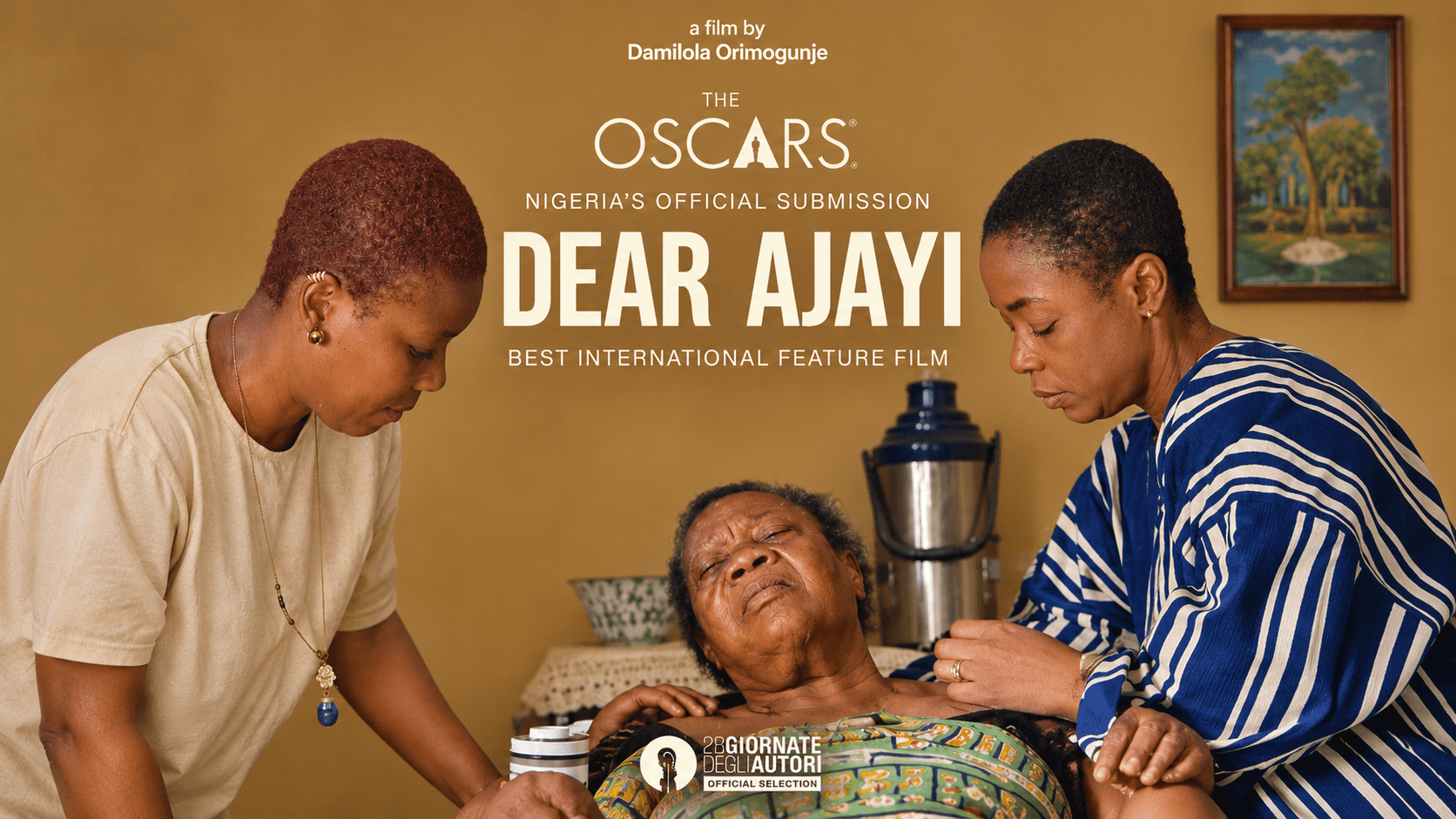
Every October, Nollywood holds its breath, and this year it is for Dear Ajayi. Nigeria’s Official Selection Committee chose Damilola Orimogunje’s film as its entry for Best International Feature at the 99th Academy Awards. The announcement set social media alight, but one distinction keeps getting lost: a national submission is not an Oscar nomination. The Academy still has to assess eligibility, and voting then narrows the field to 15 films and finally five nominees. Nigeria has never been nominated in this category, which is why this year feels different. The film follows two estranged sisters forced to reunite while caring for their paralysed mother in 1990s Nigeria. It is the first Nigerian title in competition at Venice Days, and it won two awards there. Preliminary voting runs December 7 to 11, with the shortlist announced on December 15. So the question is whether this quiet family drama can do what louder Nigerian films could
A Graveyard of Good Intentions
Nigeria’s Oscar story starts badly. Lionheart (2019), the country’s first entry, was disqualified because most of its dialogue was in English. The following year, the committee announced that films primarily in Pidgin English would be eligible. In 2022, it rejected three Yoruba films (Aníkúlápó, Elesin Oba and King of Thieves) as ineligible and entered nothing. The Milkmaid, Mami Wata and Mai Martaba were submitted, but none was nominated. Even Mami Wata, a Sundance title, didn’t get there. For the 2026 Oscars, six entries came in, but a majority of the committee voted to send none. My read, and it is analysis rather than established fact, is that eligibility confusion, committee caution and thin campaigns did the damage, not a shortage of talent. The pattern suggests that submitting is the easy part, and everything after is hard. A country that skips a year or disqualifies itself on technicalities cannot expect to be taken seriously by voters.
Africa Has Done It. Nigeria Hasn’t
Other African countries have already crossed the line Nigeria is still chasing. African countries have won this prize only three times, most recently South Africa’s Tsotsi in 2006, and South Africa’s Yesterday was nominated the year before. Algeria won with its very first submission, Z in 1970, and has four nominations since. Mauritania’s Timbuktu, directed by Abderrahmane Sissako, was also nominated. Tunisia’s The Man Who Sold His Skin became that country’s first nominee, and Four Daughters made the shortlist. This year Tunisia’s The Voice of Hind Rajab was nominated, the only African film to get there out of seven submitted. Senegal has reached the shortlist three times from seven submissions. In the 2025 shortlist, Senegal’s Dahomey was the only African contender. The lesson is that African films do break through, but rarely more than one a year. Nigeria’s industry is among the continent’s most prolific, yet it is still absent from this list.
Why Dear Ajayi Might Be the One
The case for Dear Ajayi starts with how it was built. The script passed through Ouaga Film Lab, Berlinale’s Strategic Audience Design Lab and Nouveau Marché in Montréal. The World Cinema Fund and Hubert Bals Fund+Europe backed it, with Germany’s Mayana Films co-producing. That European festival ecosystem is something earlier Nigerian entries mostly lacked. At Venice Days it won the Bisato d’Oro for Best Cast & Performances and the Fulchignoni Prize. One review praised its poise and empathy, and another called it a thoughtful study of making a career in the arts. It was shot on a single lens to evoke society’s restrictive pull, with production design inspired by Wong Kar-Wai. Its mix of Pidgin, Igbo and Yoruba reflects the linguistic diversity that is increasingly part of Nigeria’s international film identity. Venice has launched winners before: Brazil’s I’m Still Here reached the race on referral from there. “Messiah” is a heavy word for any film, but this pedigree is genuinely new for Nigeria.
What It Lacks
Nigeria deserves credit for choosing a festival-tested film and returning to the race, but the real work starts now. Neon alone took five of last year’s 15 shortlist slots, and experts advise landing a strong distributor and top publicists. I don’t know if there use a US distributor for Dear Ajayi, I only know of FilmOne for West Africa. Campaign email blasts through the Academy can cost up to $800 a week, which is a serious bill for an independent film. In the 2025 shortlist, 11 of 15 films were European, so the odds are tilted before any campaign begins. Cineuropa also found the film a bit too clean and tidy for the struggles it portrays, and voters may feel the same. Eligibility is the biggest worry: the film mixes Yoruba, English and Igbo, yet the rules demand over 50% non-English dialogue and a theatrical release between October 1, 2025 and September 30, 2026. Its reported November 13 Nigerian release sits awkwardly against that window.
If Nollywood Shows Up
Voters rank only the films they have actually seen, so visibility decides who advances. RMD and Kunle Afolayan were recently inducted into the Academy, giving Nigeria more voices in the room. Pooled funding, organised screenings and loud public support from Nigerian talent could all help, though that is my suggestion, not a proven formula. Lack of money is the biggest hurdle for campaigns without a major distributor, and that is a problem an industry can actually solve together. Unity is no guarantee, but it beats leaving a single film to fight alone. Kudos to Orimogunje, who spent about eight years bringing the story to the screen, and to producers. The cast deserves its flowers too, Bimbo Akintola, Tosin Adeyemi, Uzoamaka Power, and Baaj Adebule, among others, carried a quiet film with real weight. Whatever December brings, they have already made history at Venice Days.