A Story That Knows Where It Is Going
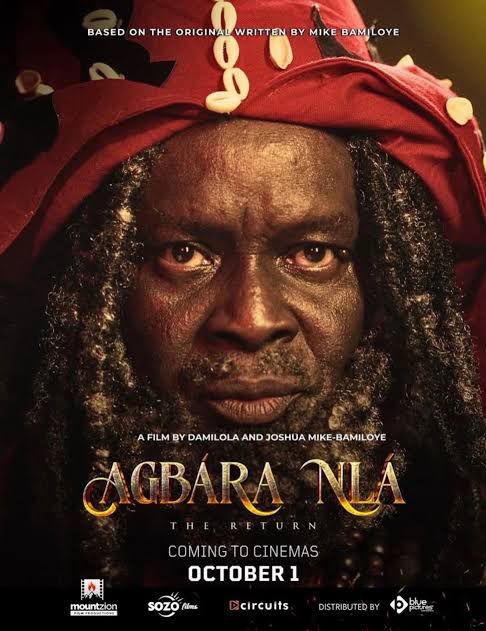
Agbara Nla: The Return is built on a story that has clearly been thought through from the first frame to the last. The plot is well developed, and what impressed me most is how creatively the subplots were woven into the main narrative. Nothing felt like filler or a detour. Each thread pulls back toward the central conflict, so by the time the film reaches its climax, the smaller stories feel like they were always part of the same design. That kind of discipline is rarer in Nollywood than it should be. The film also marks its progress with chapter cards that announce each new stage of the story. They are a small touch, but a smart one, because they help the viewer follow the journey, understand where the film is taking them, and feel the shape of the story as it unfolds.
Performances That Carry the Weight
The cast delivers, and delivers consistently. The performances across the film are convincing and grounded, and the actress who plays Bose is the standout for me. She holds the screen in the moments that matter and sells both the vulnerability and the terror her character is put through, never tipping into the over-acting that often sinks spiritual dramas. When a film asks an audience to believe in spiritual warfare, the actors must believe first, and this ensemble clearly does. Their commitment is a big reason the film’s supernatural stakes feel real rather than theatrical. You are not watching people perform fear. You are watching people who seem to be living through it, and that makes every confrontation land harder. I must add, Temi Ami-Williams is a good actor. Her performance was quite nuanced.
The Craft: Light, Frame and Score
Technically, this film shows real intention. The lighting does far more than illuminate a scene. It guides us through the emotional temperature of each moment, telling us when to feel dread, when to feel calm and when to feel grief. You can sense that someone made deliberate choices about the mood each scene needed. The shot compositions and camera angles are equally impressive, giving the film a polish and visual confidence that rewards close attention. The score deserves a round of applause too. We forget so easily that music carries half the emotion of a film, and this production understands that. The music never shouts for attention or drowns the actors. It sits inside each scene and moves with the feeling of the moment, which is exactly what a good score should do.
VFX That Works
Nollywood audiences have learned to brace themselves when the effects arrive, but here the bracing was unnecessary. The VFX in Agbara Nla: The Return is better designed and better executed than much of what we have seen in the industry, and not once did it make me cringe. Take the moment Bose climbs the wall as Evang. Paul attempts to deliver her. It is handled so convincingly that it serves the scene rather than distracting from it, and it keeps the tension intact instead of breaking the spell. Whoever handled the VFX deserves special congratulations, because the effects feel like part of the film’s world rather than something pasted on top. Add to this the film’s strong themes and clear lessons, which you simply cannot miss, and you have a work that knows what it wants to say and has the tools to say it well.
Where the Film Stumbles
The film’s weaknesses are real, though they are fixable. The sound could have been far better balanced, especially during certain dialogue moments where voices struggle against the mix. It also lacked consistency, particularly in the scenes where the Isawuru communicates with the evil beings who hand out evil children to people. Those scenes should be among the most “chilling” in the film, and uneven audio blunts their impact. The other problem is the setting. The locations are favourable, but the village scenes repeat a familiar Nollywood mistake: a village presented as large and significant that feels populated by only fifteen or twenty people. Muwonleru is introduced as a substantial village, yet on screen it feels like a small community, and that gap between what we are told and what we see weakens the world-building. A larger presence of villagers would have made the place feel lived in and believable. Fix the sound and fill the village, and this already strong film would be much harder to fault.
What Could Have Been, and What Still Can Be
Two things held this film back, its world and its sound. Muwonleru needed more people on screen to feel like a real village. Crowds in the market, elders gathered at the compound and children running along the paths would have made the place believable, and they would have shown us how many lives were at stake when evil came calling. The sound also deserved a steadier balance, especially in the Isawuru’s scenes with the evil beings, where a consistent audio texture would have made every encounter feel as eerie as the last. These are matters of finishing, not talent, and they are fixable. The film has already shown it can handle story, performance, lighting, score and VFX at a high level. With a fuller village and a tighter mix, the next chapter in this world could be among Nollywood’s most complete films, and I am hopeful it will be.