The Cringe Has Left the Building
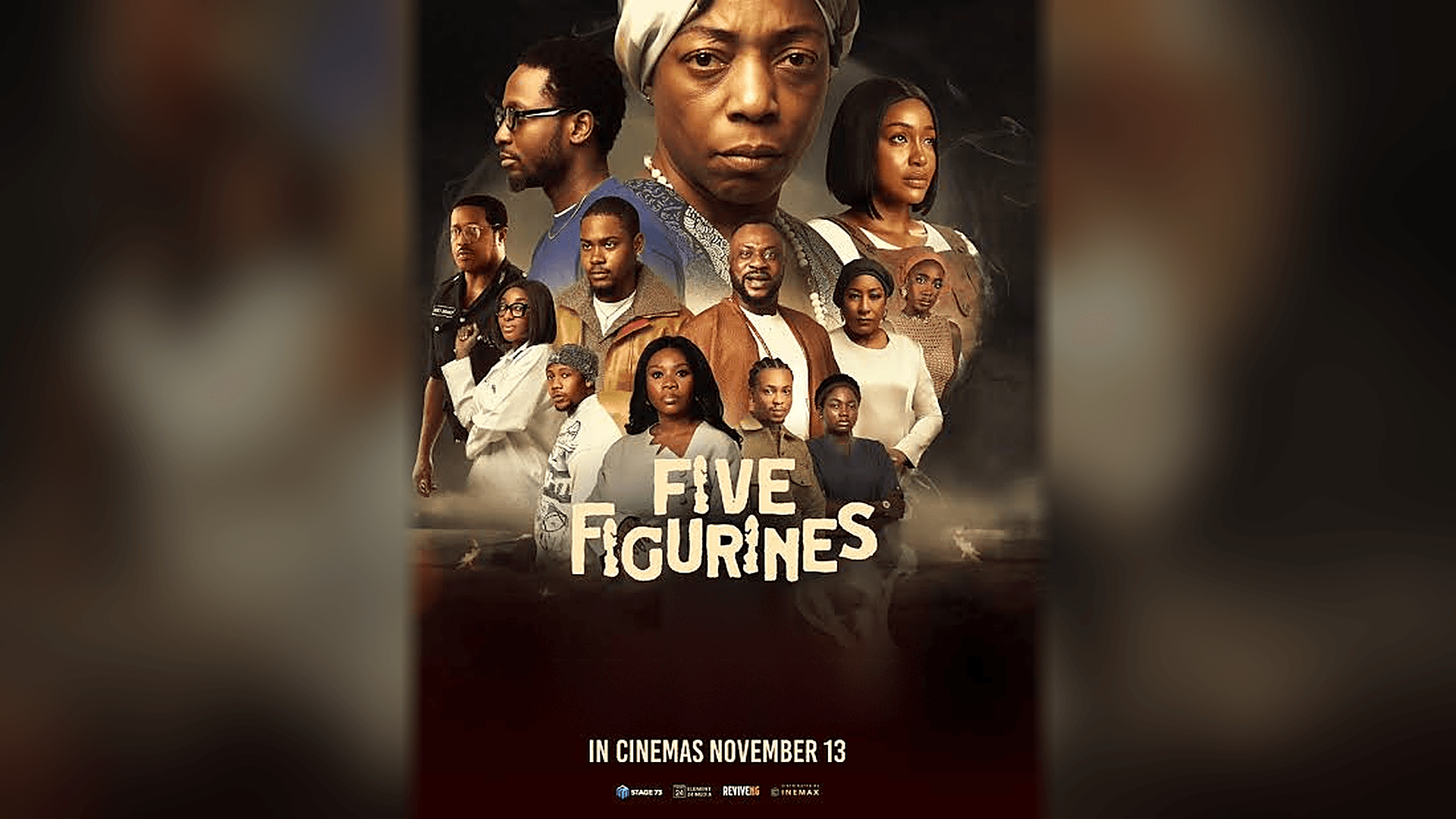
Anyone who loves Nollywood knows the dread of the revenge thriller. You sit down hoping for menace, and you get a woman crying in slow motion, a villain who announces his evil plan to an empty room, and background music that sounds like it was recorded in a panic. You spend the whole film curled into your seat, embarrassed on the film’s behalf. So I went into Five Figurines the way you go into a restaurant that once gave you food poisoning, politely and with one eye on the exit. Then something strange happened. I stopped bracing. The cringe never came. This may be the highest compliment I can pay a Nollywood revenge thriller, and I mean it as a real one, because in this genre embarrassment is the default setting and avoiding it takes craft. Akay Mason has made a film that knows what it is, wants to be nothing else, and doesn’t flinch while saying so. It is tense and cold-blooded, and it moves like it has somewhere to be. It is not flawless, and I will get to where it cracks. But for most of its running time, it treats the audience like adults who came for a thriller and not a sermon. That is rarer than it should be, and it makes Five Figurines one of the best revenge films Nollywood has given us in a long while.
A Plain Story, Told With Nerve
The story is simple and straightforward, and it is better for it. A lot of Nollywood thrillers drown in plot, as if the filmmakers were afraid that one clear idea wouldn’t be enough to hold us. Mason does the braver thing. He picks a single line of revenge and follows it without wandering off into subplots, and the film gets sharper because of that. The simplicity gives him room to show off a real vision, and it is a strong one. You can feel a director who knows where every scene is headed and why. The writing deserves its share of the credit. The dialogue is carefully lined. People speak the way people speak, without the stiff, over-explained speeches that make so many Nigerian scripts sound like they were read aloud before they were lived in. When a character says something cruel, it lands because it sounds like something a person would actually say. That is harder to do than it looks. Good dialogue disappears into the scene and does its work quietly, and here it mostly does. In a film culture that often confuses noise with intensity, a thriller that speaks in a normal voice and still scares you is a small act of confidence, and a welcome one.
The Camera Does the Crying
If I had to name the real star of Five Figurines, it wouldn’t be an actor. It would be the cinematography. The camera in this film isn’t a bystander. It is a storyteller, and sometimes it tells the story better than the people in front of it. The tight framing is the key. Mason and his cinematographer move in close, so close that you can’t look away, and the closeness does emotional work that the performances alone don’t always manage. In the moments where I wasn’t feeling what a scene wanted me to feel, the frame pulled me in anyway, forcing the feeling out of the image itself. Then there are the scenes you will talk about on the drive home. There is the moment Mrs Aisha is shown how the killers she sent after Ebi actually died, a sequence that turns a woman’s confidence into dread right in front of you. There is the drowning of Chuks’s character, which is brutal and unhurried. And there is that strange, unforgettable image of a snake turning into someone’s hands, the kind of shot that sneaks into your dreams and sits there. These aren’t just well-made scenes. They are images, which is what cinema is made of. A film like this makes a good case for the big screen, because on a phone you’d miss half of what the camera is trying to do to you.
Faces That Carry the Weight, and Faces That Don’t
Some performances here stand out. Bimbo Akintola is the spine of the film and anchors it with a seriousness the material needs. Mike Ezunroye matches her with real presence, and Iretiola Doyle does what she always does, which is to make every second on screen count. These are actors who understand that menace lives in stillness and not in shouting, and watching them hold a silence is one of the film’s quiet pleasures. But a film is only as strong as its weakest piece of casting, and here the casting stumbles. I simply didn’t see Odunlade Adekola in his role. He is a gifted actor, and that is exactly the problem, because I kept seeing a gifted actor instead of the person he was supposed to be. The same goes for Wumi Toriola as Clinton’s mother. I couldn’t buy it. Casting isn’t about stacking famous names on a poster. It is about whether I believe the person in front of me, and the moment I stop believing, the film stops working. Belief is the one currency a thriller can’t fake, and in these two cases the film overspent. Some will argue they were introduced for comic relief. Oh well, rather convenient!
Where the Plot Cheats
Now to the cracks. For all its clarity, Five Figurines leans too often on convenient plot devices. Some lines exist only to push the story forward, and some motivations feel hard because the script needs them to be hard, not because they grew naturally out of the story. You can feel the writer’s hand on the scale. Take the fight that leads to the death of Chimezie’s character. I already knew he was going to die, so I wasn’t waiting for the surprise. I was waiting for a reason, a motivation that carried weight and made his death hurt. What I got was that he came with Grace to the party. That is thin, and a death built on thin ground feels cheap. The relationship between Chimezie and Uche also failed to convince me. I saw no chemistry between them, not even a little. Uche looked noticeably older than the rest of the young cast and could easily have passed for one of the mothers. If the film meant her character to be a league above his, it never explained how he won her, and the pairing didn’t sit right. And then there’s the sound. The score and sound design could have done so much more. In the moments when the film needed music to tell me how to feel, it stayed quiet, and I was left to find the emotion on my own.
The Hole at the Centre, and Why You Should Still Go
The film’s biggest flaw is also its most frustrating, because it sits at the centre of everything. Ebi, the woman the whole story depends on, is the character we know least about. Everyone around her gets at least a sketch of a past, but Ebi, the one person the revenge plot rests on, gets almost nothing. Who was she before all this? Was she educated or not? Why does she speak the way she does? She is introduced as the typical trenches mum, but we are never told what made her, and without that I couldn’t fully feel for her. I wanted to ache for Ebi, and I only understood her, which is not the same thing. The veneers made it harder. They were distracting, and they pulled me out of a character I was trying to believe, especially given how she was introduced. A stronger backstory and a more thoughtful job from the makeup department would have closed that gap. Still, I’d rather spend my energy complaining about a film’s missing pieces than about its cheap ones, and Five Figurines is a film worth wanting more from. It is sharp, handsome and confident, and it never insults you. Nollywood doesn’t give us thrillers like this often, and when it does, we have to turn up. Go and see it in the cinema. Buy the ticket, switch off your phone, and let that camera work on you.