The Paper Nobody Wants to Respect
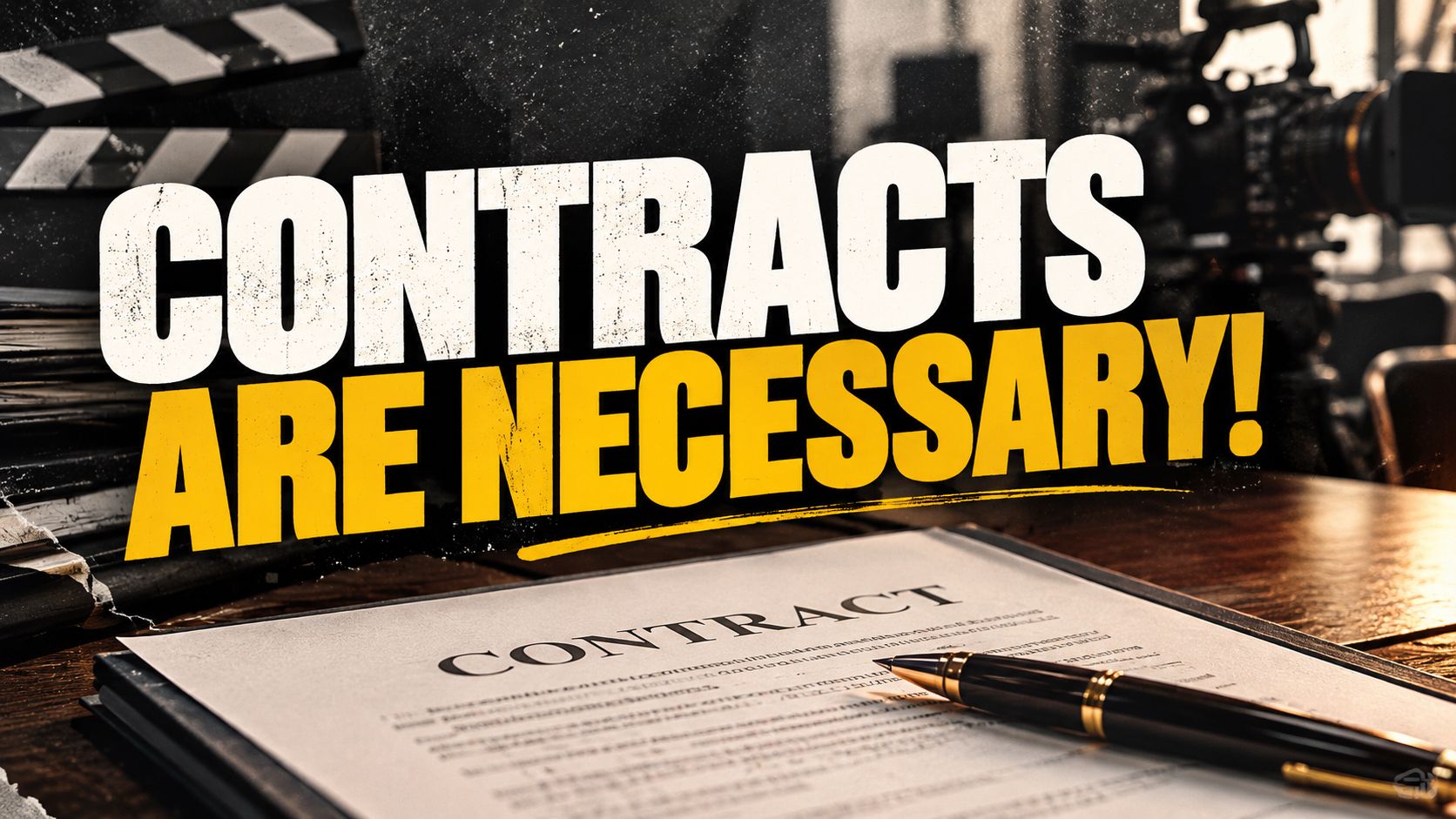
A contract is not an insult, a sign of distrust or a ritual for big budgets. It is the one document that says, in writing and before anyone is emotional, what each side has promised: the dates, the scope of work, the fee, when and how it will be paid, who owns the finished product, how credit will be given and what happens when someone fails to deliver. It exists because memory is selective, goodwill is temporary and people change their minds when money, fame or pride enters the room. Without it, both sides are exposed. The actor can be underpaid, paid late, used in promos and reuploads they never agreed to, or replaced without notice. The producer can be left with a lead who disappears mid-shoot, a crew member who later claims rights, a film they cannot distribute properly because the chain of ownership is unclear, and a dispute they cannot settle because everything was "understood." An industry that runs on "we understand each other" will eventually discover that nobody understood the same thing.
N3 Million Is Too Small for Paper, But N10 Million Is Fine?
Consider a story making the rounds in the YouTube filmmaking space, which I have heard secondhand. A popular female producer, hired for a job, reportedly charges N1 million a day. The client needed her for three days and agreed to pay N3 million. When a contract was presented, she reportedly asked why a N3 million job needed one, and said that if they wanted her to sign, they should pay her N10 million a day. If that is how it happened, it says a great deal about the thinking in this industry. It treats a contract as a favour the client is asking for, to be priced like a luxury, when it is the very document that would protect her N3 million. She would be the first person to shout if that payment arrived late, if the scope grew from three days to five, or if her work were used in ways she did not approve. Declining paperwork while expecting professional treatment is having it both ways. A producer who negotiates on terms is serious. One who refuses terms altogether is asking to be trusted on vibes.
The Ego Clause Nobody Wrote
Underneath this sits ego, and it flows in both directions. Many producers believe contracts are for foreigners, corporate offices and people who do not trust their word, and that signing one makes them look small. Many actors believe that asking for one makes them look difficult, or worse, ungrateful, and they have seen what happens to those who push back: a quiet replacement, a role recast, a phone that stops ringing. So the actor stays silent, the producer enjoys the silence, and both are happy until something goes wrong. Then the same people who refused the paper start misbehaving. Producers delay payment, change the schedule, add scenes and drop credits. Actors turn up late, demand more mid-production, walk off set or leak content, because there is nothing to hold them to. Pride is the reason the agreement was never written, and pride is the reason the dispute becomes a public fight on Instagram instead of a private matter settled on paper.
Until Somebody Pays the Price
Of course, someone will say that signing contracts has never helped anyone in Nollywood anyway, and they are partly right. A contract nobody enforces is just a nicely typed suggestion. Everyone in this industry knows of a case where a deal was signed, broken and forgotten, and no one paid a price. That is exactly why behaviour has not changed. Until someone who breaches a contract is dealt with firmly and publicly, whether by a court, by an industry panel or by a loss of work that others can see, nobody will take the paper seriously. I am not asking for anyone to be destroyed unfairly, and the word "scapegoat" is not the right one if the person actually broke the agreement. I am saying that an industry learns when it sees consequences. The first clear case where a lead actor who abandoned a production repays the costs, or a producer who refused to pay is made to settle with interest, will do more for contract culture than a hundred panel discussions. Fear of consequences, not good manners, is what makes people sit up.
The Guilds Are Asleep and the Government Is Missing
This is where government and the guilds come in, and where they have been too absent. The Actors Guild of Nigeria, the directors' and producers' bodies and the other guilds should publish a simple standard agreement that independent productions can use for a one-day or three-day job, so that nobody has to hire a lawyer to protect a N3 million shoot. They should set up a disputes panel with a short, clear process, publish its findings and apply real sanctions, such as suspension of membership, a public notice and restrictions on future work, for repeat or serious breaches. They should also protect the weaker party: an actor who asks for a contract must never be penalised for it, and any producer found to be blacklisting people for requesting paperwork should be sanctioned. Government agencies that deal with film classification, copyright and creative-industry support can help by encouraging proof of signed agreements in their processes, offering affordable arbitration for creative disputes and giving the courts a faster route for small claims. Distributors, platforms and sponsors can do their part by refusing content with an unclear chain of rights. None of this is difficult. It simply requires people to stop treating a signature as a threat, and the industry to decide that being professional is not optional, however popular you are.