A Premise That Promises More Than It Pays
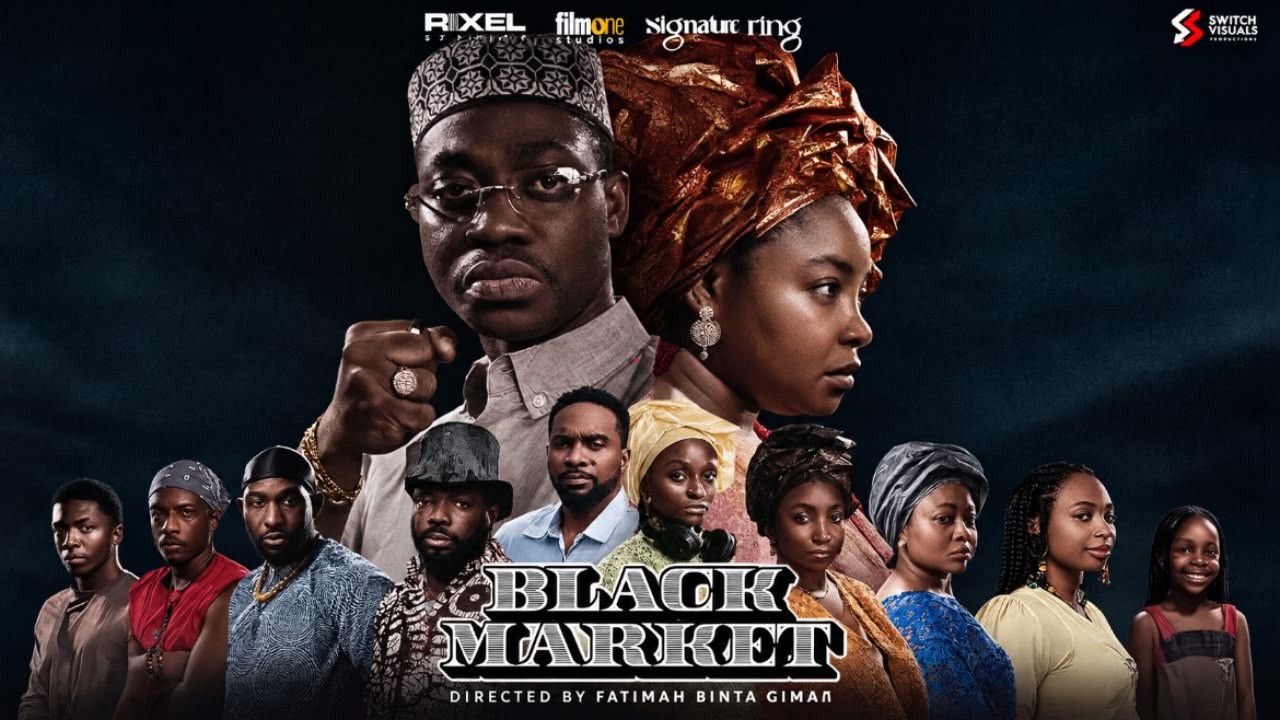
Black Market sets up its conflict early, and credit is due for that. Two smuggling cartels operate in the same underworld, and only one has cracked the code. The women move their goods past police lines with ease, while the men, for all their bluster, are struggling. Checkpoints keep catching them, and bad luck seems to follow them everywhere. Eventually the men swallow their pride and reach out to the women for help and collaboration, only to be refused because of their relationship history. Rejected, they decide to force the women’s hand. It’s a strong engine for a crime drama, built on rivalry, wounded pride, old grudges, and coercion, and you can see the film’s intentions within its first few scenes. But a good premise is only a promise, and what follows shows how little the film knows about keeping one. The idea does the heavy lifting, and the filmmaking never catches up to it.
A Debut Worth Acknowledging, Not Excusing
Black Market is Fatimah’s feature directorial debut, and finishing a feature film is an achievement that deserves applause. It takes stamina, resources, and nerve to see a project like this through, and not every aspiring director gets that far. But applause for effort is not a substitute for scrutiny of the result. A debut earns encouragement, not a free pass, and the film’s problems are too fundamental to wave away as first-time jitters. They sit in the story, the characters, and the world, which are the foundations of any film. What the debut reveals is a filmmaker with ambition and a clear sense of the world she wanted to build, but without the control to make that world convincing on screen. That gap is one experience can close, and it will be worth watching whether Fatimah closes it. The potential is visible, but potential is not the same as delivery, and a review has to deal with what is actually on the screen.
Performances and Craft: The Film’s Best Defence
The best of this film lies in its performances and craft. Linda Ejiofor gave the most convincing performance, grounded in a film that could have used a lot more groundedness. Omowunmi Dada and Scarlet Gomez also stood out, holding their scenes together when the writing offered them little support. The art direction deserves real praise for establishing mood and helping us follow the story through its settings, so that we always understood the kind of space these characters were moving through. The cinematography came to the rescue in moments when character motivation was murky, doing visually what the script failed to do on the page. The editing was mostly good, and the sound had a pleasing balance that kept scenes from feeling chaotic. That is a lot of competent work across several departments, and it only makes the film’s failures more frustrating. The technical team built a solid house, and the story left it empty.
A Story That Squandered Its Setup
Here is where the film falls apart. The story needed far better development, and what we got was an idea with a great deal of promise that landed flat. The arcs needed serious help. They never build, never escalate, and never earn their destinations, so the film drifts when it should be tightening. Characters are treated as plot conveniences, there to move things along rather than to live in the story, and the film would have carried on without several of them. That says everything about how little thought went into them. With no real character development, the emotional moments have nothing to stand on. The scenes meant to make us sympathize fell flat, and the feelings the film wanted us to have were lost somewhere in the translation to screen. Several scenes try desperately to have soul and simply cannot, and you can feel the effort without ever feeling the result. The ending is the final proof, arriving with no soul at all, a conclusion that fails to honour the conflict it spent so long setting up.
A World That Doesn’t Hold Together
For a film about rival cartels, Black Market has a serious problem selling the scale of either one. Junior is presented as the lord of a powerful oil-smuggling operation, yet it seems to revolve around three couriers, reduced to two when he kills one of them. A kingpin with a staff that small doesn’t read as a kingpin, and the film never explains why. The women are no better served, with just three of them apparently doing all the work, which feels rather convenient. Then comes the film’s most damaging flaw. The women have someone in the police force helping them through checkpoints, while the men, in all their supposed grandness, have no one. The men’s constant failure stops looking like a clever contrast and starts looking like writing that needed them to lose, and it guts the threat of the cartel we are supposed to fear. Junior’s killing of one of his workers is meant to establish his ruthlessness, but its motivation is so thin that it plays as a plot device, a shortcut to menace rather than a moment that earns it. Lateef, a good actor, delivers a performance that is more performative than lived in, straining to convince us that Junior is a very bad man, when the best villains never have to try that hard. The score has no soul either, leaving the film’s emotional high points unsupported. Nora’s previous work, Red Circle, wasn’t without its flaws, but it was better developed than this, and that comparison is not a flattering one.
What Could Have Saved It
The central rivalry deserved to be earned. The relationship history that makes the women refuse the men should have been the beating heart of the film, yet it is treated as background. Dramatising it, through a pivotal flashback, a confrontation, or even a sharply written exchange, would have given the refusal weight and made the men’s decision to force the women’s hand feel like the explosion of a long-buried conflict instead of a plot requirement. That coercion needed to escalate in steps, with each move costing something, so the audience could feel the pressure tightening. The police insider should have been more than a convenient door opener. Letting that relationship carry risk, and letting the men’s lack of protection feel like a consequence of their own choices, would have made both cartels more believable. Cutting the characters who exist only as devices would have freed time for the few who matter, and giving them real inner lives would have made the climax feel earned instead of arranged. A score with a real point of view and an ending that grew out of the central feud would have given audiences something to feel as the credits rolled. As it stands, Black Market is a film that knew what it wanted to say and never worked out how to say it.